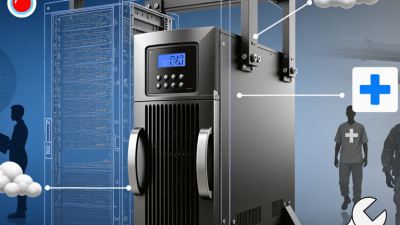
What Is a Military DC to DC Power Converter?
A Military DC to DC Power Converter transforms one direct-current voltage into another for demanding defense electronics. It helps radios, sensors, navigation units, displays, and embedded computers receive stable power. Unlike ordinary commercial converters, it must perform reliably during vibration, temperature changes, electrical noise, and limited maintenance access.
The design usually includes switching circuitry, magnetic components, filtering, protection, and thermal management. Input voltage may fluctuate when batteries discharge or vehicle systems change operating conditions. The converter must still provide clean, regulated output power. Efficiency matters because wasted energy becomes heat inside a sealed enclosure. Every degree can affect component life.
Small details matter.
Engineers often evaluate isolation, transient response, electromagnetic compatibility, shock resistance, and fault behavior. They may also review documented test results against applicable military or industry requirements. However, no single specification guarantees suitability for every platform. Installation, grounding, cable length, airflow, and load behavior can change real performance. That point is easy to overlook.
A reliable Military DC to DC Power Converter should therefore be selected through measured requirements, not impressive labels alone. Engineers need to confirm voltage range, output capacity, ripple limits, efficiency, cooling method, connector strength, and environmental ratings. Field experience can reveal problems that laboratory data misses. A connector may loosen after repeated vibration. A converter may run well on a bench but overheat in an enclosed vehicle bay.
This guide explains how these converters work, where they are used, and which specifications deserve careful review. It also considers practical trade-offs between size, efficiency, protection, cost, and long-term reliability. Some assumptions may need testing. That is normal in serious power-system design.
Read more »
 By:Amelia
- September 22, 2026
By:Amelia
- September 22, 2026
 By:Evelyn
- September 22, 2026
By:Evelyn
- September 22, 2026