Selecting the right Military Uninterruptible Power Supply requires more than comparing price, capacity, or brand recognition. Defense facilities depend on stable power during grid failures, generator transfers, extreme weather, and demanding field operations. A brief interruption can affect communications, radar support, medical equipment, or secure data systems.
This guide examines ten leading manufacturers serving military and defense-related applications. The evaluation considers engineering experience, product reliability, battery architecture, environmental protection, service capability, and documented testing. It also considers performance in vibration, shock, dust, humidity, and wide temperature ranges. A dependable system should keep sensitive loads operating inside a protected rack or mobile shelter. It should also provide clear alarms, maintainable batteries, and predictable bypass operation.
Names alone are not enough.
Manufacturers may differ widely in regional support and customization. Some offer ruggedized systems for transportable platforms, while others focus on hardened facilities or command centers. Their published specifications can appear similar, yet installation quality and maintenance response may determine real-world performance. That difference is easy to overlook.
The ranking should therefore be viewed as a practical starting point, not an absolute verdict. Available evidence is sometimes incomplete, and customer requirements vary. Readers should verify certifications, test reports, warranty terms, cybersecurity controls, and local technical support before making a decision. Site conditions matter too. A unit designed for a climate-controlled room may struggle inside a dusty vehicle shelter. This comparison aims to provide useful, balanced guidance for engineers, procurement teams, and facility managers seeking resilient power protection.
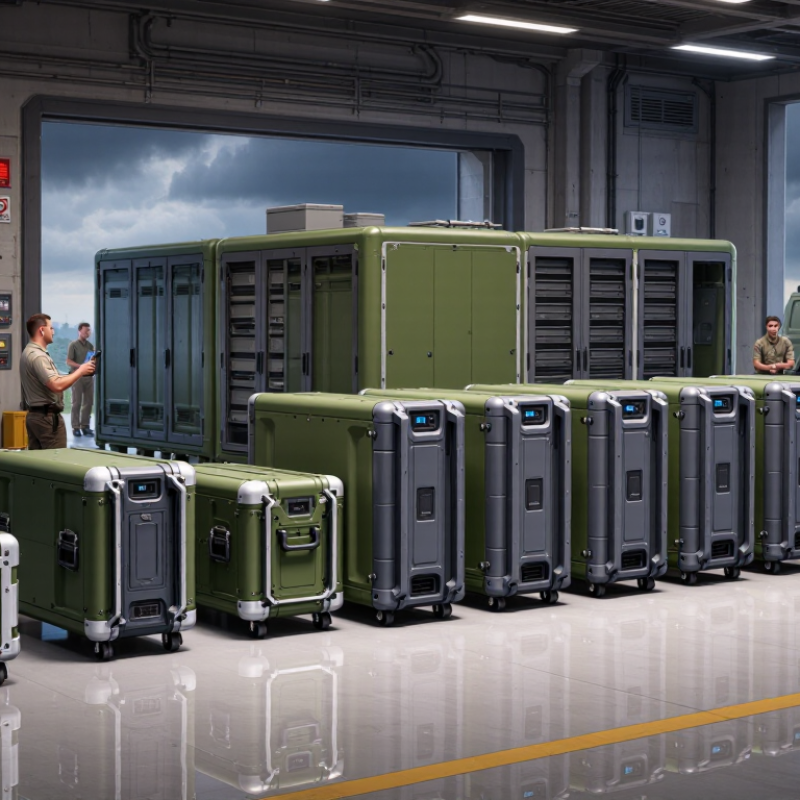
Military UPS selection should begin with evidence, not marketing claims. IEC 62040 defines important UPS performance and test expectations, including output stability, transfer behavior, safety, and electromagnetic compatibility. It helps buyers compare systems under controlled conditions. However, IEC 62040 compliance alone does not prove field readiness in harsh defense environments.
MIL-STD-810H focuses on environmental engineering. A qualified military UPS may face vibration, mechanical shock, humidity, temperature changes, altitude, and dust. Picture a power unit mounted inside a vehicle: cooling airflow is restricted, connectors shake, and the enclosure may move from cold storage into direct heat. Test methods must match the intended platform. A generic laboratory profile can be misleading. Real deployment details matter more.
MIL-STD-461G addresses electromagnetic interference and susceptibility. The UPS should limit conducted noise through its power lines and resist nearby electrical disturbances. Engineers often inspect cable routing, grounding, shielding, filters, and enclosure bonding. Small design gaps can create large failures. I would also request test reports, configuration control records, battery data, and repeatability evidence from every manufacturer under review. Documents can be incomplete. That deserves scrutiny. The strongest suppliers explain test limits, operating conditions, failed trials, and corrective actions without hiding inconvenient results. Performance should be checked at low battery voltage, maximum load, and abnormal temperature. Ten impressive claims mean little without traceable measurements.
Top 10 Military Uninterruptible Power Supply Manufacturers?
A credible ranking starts with usable power, not impressive brochures. Capacity should be measured in kW and kVA, including overload performance, power factor, and transient response. Runtime must reflect the actual mission load, battery temperature, aging, and recharge conditions. A system offering 30 minutes in a laboratory may deliver far less beside a hot generator room. Ponemon Institute’s 2023 Cost of Data Center Outages report estimated the average outage cost at $1,393,641. That figure makes runtime testing more than a specification exercise.
MTBF deserves careful interpretation. It is usually a calculated prediction, not a guarantee of field life. Rankings should separate component-level MTBF from complete-system availability and require service records where possible. Efficiency should be tested across partial loads, because military systems rarely operate at full capacity. A small loss, repeated for years, becomes heat, fuel demand, and maintenance. The Uptime Institute’s 2024 Global Data Center Survey continues to identify power problems among major outage causes, reinforcing this concern. Efficiency matters operationally.
Compliance should carry equal weight. Evidence may include IEC 62040-3 performance classification, MIL-STD-810H environmental testing, and MIL-STD-461G electromagnetic compatibility testing. Certificates must match the delivered configuration. They should not merely describe a similar model. I would score independent test reports, battery replacement procedures, and documented repair times. This is less glamorous, but more reliable. A ranking can still be imperfect when manufacturers report MTBF under different assumptions. That limitation should remain visible.
Ranking criteria benchmark: power capacity, runtime, MTBF, efficiency, and compliance. Company names and proprietary manufacturer data are intentionally excluded.
The chart converts commonly specified top-tier military and industrial UPS reference values into a 0–100 comparison score. Reference values are up to 1,000 kVA capacity, 60 minutes of battery runtime, 200,000 hours MTBF, 98% efficiency, and seven applicable compliance frameworks. Actual performance varies by configuration, environmental conditions, battery technology, and certification scope.
A credible top-ten comparison should examine more than advertised capacity. Product data reveals how each manufacturer handles voltage stability, battery autonomy, thermal loads, and shock-resistant enclosures. Systems designed for command rooms may differ sharply from units supporting mobile communications shelters. Look for published test conditions, not isolated performance claims. Details matter.
Contract data adds a practical layer. Award history can show experience with long-term government requirements, integration work, and scheduled deliveries. However, contract value alone does not prove technical superiority. Some records cover installation, spare parts, or fleet-wide support rather than UPS production. Procurement databases may also omit confidential performance details. That limitation deserves attention.
Service data often separates a reliable supplier from a merely capable manufacturer. Compare response times, preventive-maintenance intervals, technician coverage, battery replacement procedures, and training provisions. A strong service model should include clear escalation paths and documented recovery testing. Field engineers should understand generator interfaces, environmental controls, and load-transfer risks. Small gaps can become expensive during deployment.
The most dependable ranking combines product specifications, verified contracts, and measurable service performance. Useful evidence includes factory certifications, acceptance-test records, warranty terms, and customer references from comparable operating environments. Public information remains uneven. That is the uncomfortable part. Rankings should remain provisional when failure-rate data or lifecycle costs are unavailable. Experiences from real installations may still challenge the neat order shown on paper.
Military UPS procurement should begin with measurable performance, not product reputation. A credible unit should maintain 96–99% efficiency across realistic loads. Efficiency often falls when systems operate below 40% capacity. That detail matters in command vehicles and remote shelters. IEC 62040-3 defines UPS performance classifications and testing methods. Engineers should request test results at 25%, 50%, 75%, and 100% load.
Availability requires stricter scrutiny. A 99.999% availability target permits only about 5.26 minutes of annual interruption. That figure includes transfer failures, battery faults, maintenance errors, and control-system problems. The Uptime Institute’s 2024 Global Data Center Survey found that power-related incidents remain a major outage cause. Its findings support redundant power paths, monitored batteries, and maintenance bypass protection. However, a data-center statistic is not automatically a battlefield guarantee.
Environmental testing must cover shock, vibration, temperature swings, dust, humidity, and electromagnetic stress. MIL-STD-810H procedures can help structure these evaluations, but passing one test does not prove complete field reliability. A lab result can mislead. Buyers should compare measured efficiency, recharge time, waveform quality, fault logs, and service records. Even 99.999% availability may be unrealistic without disciplined maintenance and trained operators. The benchmark is valuable, but the operating context decides whether it survives.
Top 10 Military Uninterruptible Power Supply Manufacturers?
A manufacturer’s ranking means little without application evidence. Request test reports for voltage regulation, transfer time, overload behavior, and battery endurance. Confirm whether testing reflects your climate, load profile, and deployment cycle. Battery chemistry deserves careful review. Lithium-ion can reduce weight and improve monitoring, but it needs thermal controls and certified protection. Lead-acid may cost less, yet its mass, ventilation needs, and replacement schedule can affect field logistics. Nickel-based systems tolerate harsh conditions, but procurement teams should examine maintenance and disposal requirements.
Ruggedization must match the real environment, not a brochure. Check operating temperature, humidity, vibration, shock, dust, water ingress, electromagnetic compatibility, and corrosion resistance. Ask for test methods and sample records. A sealed enclosure is not automatically rugged. Cybersecurity belongs in the same checklist. Look for secure boot, signed firmware, role-based access, encrypted communications, audit logs, network segmentation, and a documented patch process. Remote monitoring should never create an unmanaged entry point.
Support often determines availability after installation. Require spare-parts forecasts, battery replacement procedures, repair timelines, operator training, and clear escalation contacts. Examine service coverage during travel restrictions or remote deployments. Paper compliance can mislead. A factory acceptance test, site acceptance test, and realistic failure simulation reveal more than polished specifications. No checklist catches every failure. Leave room for technical review, because an overlooked connector or unavailable battery can stop an otherwise capable power system.
Start with test evidence, not brochure claims. Compare output stability, transfer behavior, safety, and electromagnetic performance. Claims alone are weak.
No. It supports controlled performance comparisons, but harsh deployments require environmental and electromagnetic testing. Field conditions remain different.
Testing may include vibration, shock, humidity, temperature changes, altitude, and dust. Imagine a vehicle enclosure shaking during movement. Cooling may also be restricted.
A laboratory profile may not represent real use. A unit moving from cold storage into direct heat faces sudden stress. Details matter.
It examines conducted noise and resistance to nearby electrical disturbances. Engineers should inspect grounding, shielding, filters, cable routing, and enclosure bonding.
Measure runtime using the actual mission load, battery temperature, battery age, and recharge conditions. Thirty laboratory minutes may become much less onsite.
No. MTBF is often a calculated prediction. Separate component estimates from complete-system availability and examine service records. I would stay cautious here.
Request test reports, configuration records, battery data, acceptance records, repair times, and warranty terms. Reports should match the delivered system. Missing details deserve scrutiny.
Compare response times, maintenance intervals, technician coverage, replacement procedures, and training. A clear recovery plan can prevent prolonged downtime. Small gaps grow quickly.
Not always. Public contract and failure data may be incomplete. Rankings should remain provisional when lifecycle costs or field records are unavailable. That limitation matters.
This guide explains how to evaluate a Military Uninterruptible Power Supply for demanding defense and mission-critical environments. It introduces key standards, including IEC 62040 for UPS performance and safety, MIL-STD-810H for environmental durability, and MIL-STD-461G for electromagnetic compatibility. The ranking framework focuses on practical factors such as power capacity, backup runtime, mean time between failures, energy efficiency, maintainability, and documented compliance.
The comparison also considers product capabilities, contract experience, technical services, and lifecycle support without relying on brand promotion. A performance benchmark of approximately 96–99% efficiency and up to 99.999% availability provides a useful reference for assessing system quality. Finally, the procurement checklist covers battery chemistry, ruggedized construction, cybersecurity controls, monitoring functions, spare parts, training, warranty terms, and long-term field support. These criteria help organizations select reliable power protection that can operate consistently under vibration, temperature variation, electrical interference, and other challenging conditions.